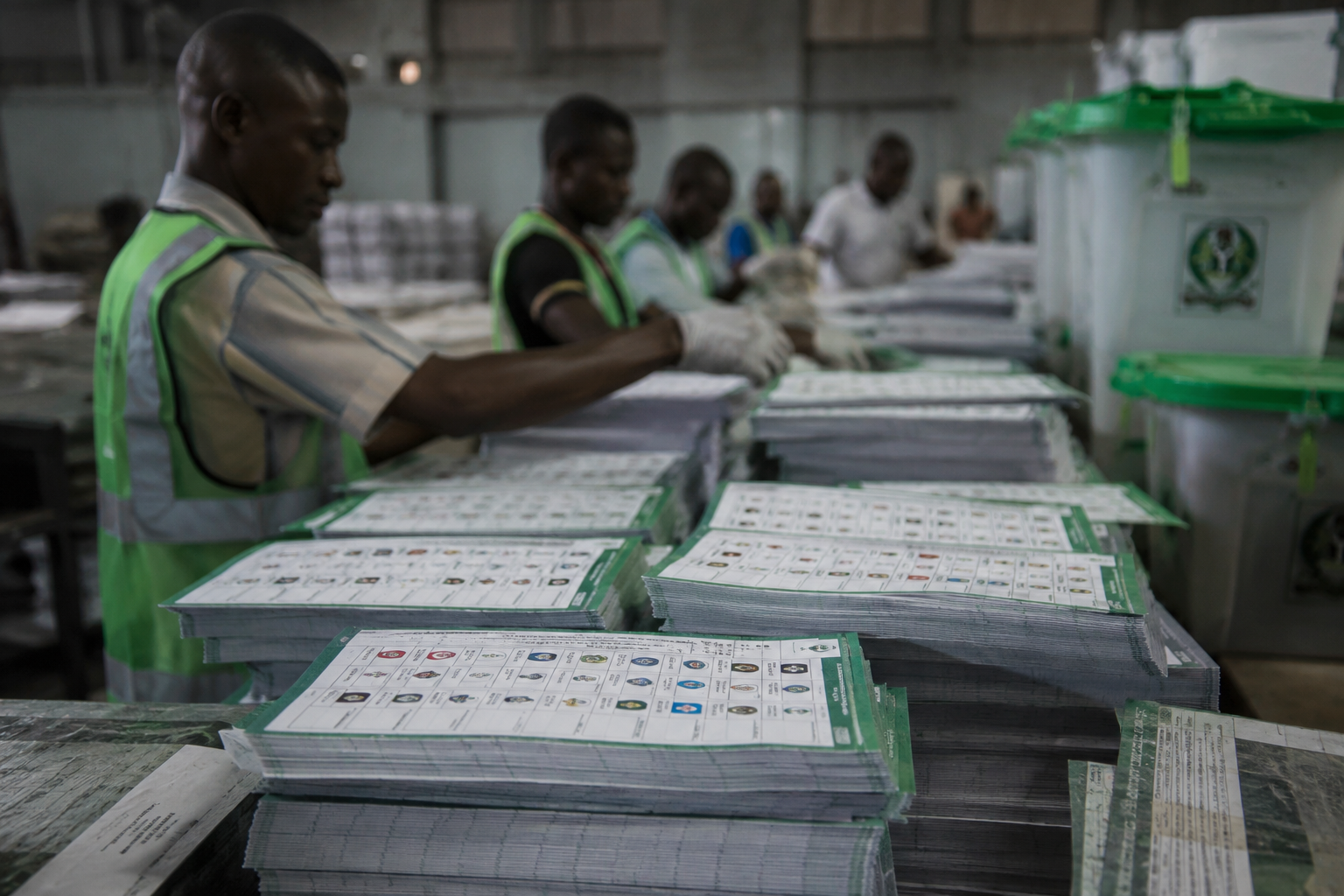
The report was first published by Nairaland.
Questions are beginning to emerge over how sensitive election printing contracts may allegedly be handled ahead of Nigeria’s 2027 general elections.
According to a recently circulated investigative publication titled “The Bloody Ballot: Political Cartel,” concerns have been raised about possible political influence in the awarding of ballot printing contracts before the next presidential election.
Although the claims contained in the publication have not been independently verified or proven in court, the report has sparked wider public discussion about transparency in Nigeria’s electoral process.
The publication reportedly questioned who should control the production of Nigeria’s ballot papers, especially as the country continues shifting from foreign printing firms to local production of electoral materials.
Supporters of local ballot production argue that it supports Nigerian businesses, saves foreign exchange, builds local technical capacity, and reduces logistics costs.
However, critics reportedly fear that localising ballot printing could expose the process to political interference if strict oversight measures are not enforced.
The publication also alleged that some politically connected companies may already be positioned to benefit from election printing contracts ahead of 2027.
Among the concerns reportedly highlighted in the document are alleged lack of transparency in procurement procedures, questions surrounding the political affiliations of certain firms, concerns about contractor experience in secure electoral printing, and issues relating to accountability and oversight.
The report further referenced previous controversies involving election-related contracts and called for stronger scrutiny from journalists, civil society organisations, and oversight agencies.
It stressed that all claims contained in the document remain allegations unless officially confirmed through legal or regulatory findings.
Observers involved in the discussion reportedly argued that transparency remains essential for strengthening democratic institutions and maintaining public trust in the electoral process.
The publication concluded that whether the allegations are eventually substantiated or not, the debate reflects growing public demand for accountability and electoral integrity ahead of Nigeria’s 2027 elections.
What do you feel about this post?

Like

Love

Happy

Haha

Sad