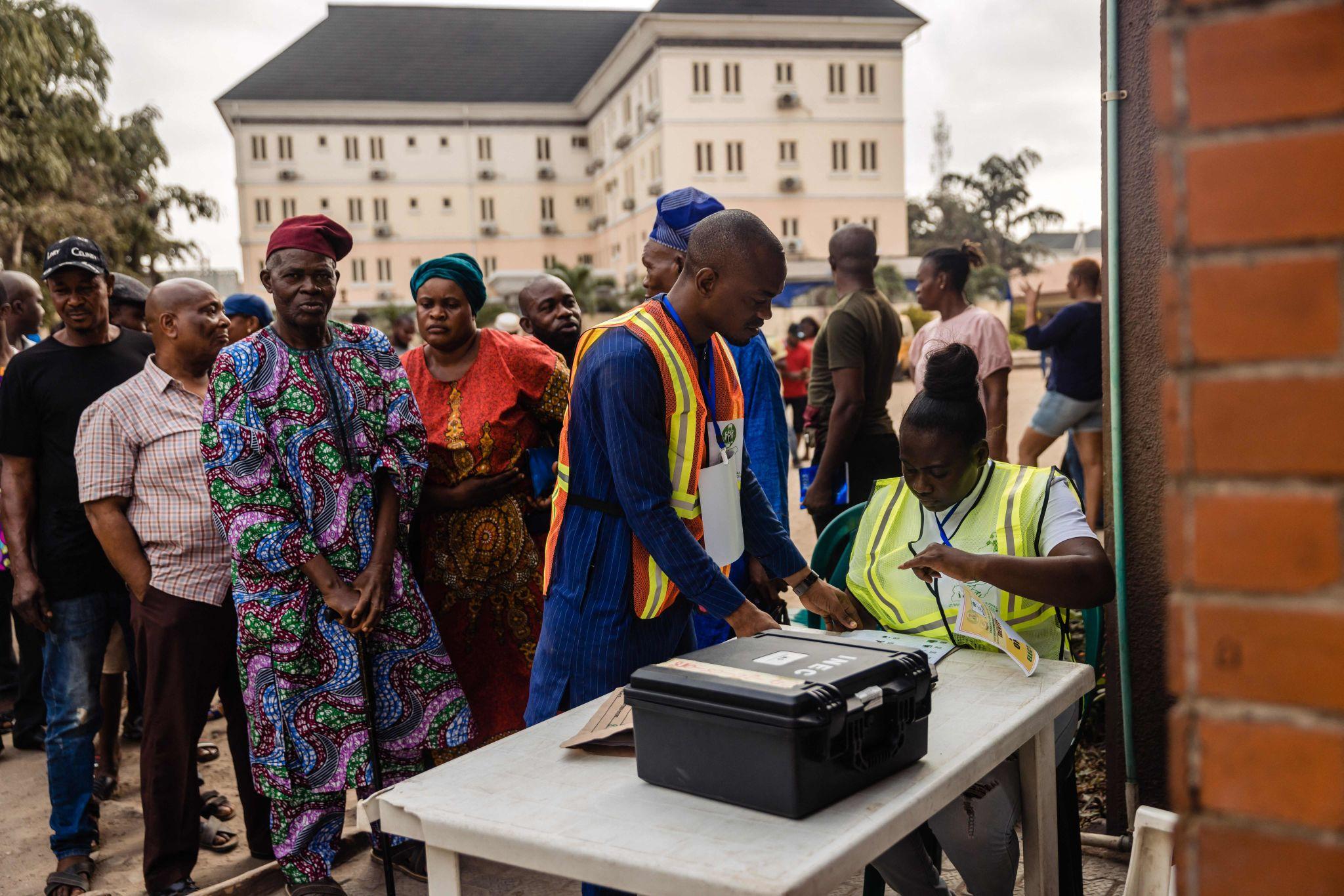
Every election season in Nigeria, one institution suddenly finds itself at the centre of national attention, public scrutiny, political controversy, and intense media coverage.
That institution is the Independent National Electoral Commission (INEC).
Whether it is a presidential election, governorship contest, National Assembly race, or local political dispute, INEC often becomes one of the most discussed government agencies in the country.
For millions of Nigerians, the commission represents the guardian of democracy. For politicians, it is the referee responsible for overseeing the nation’s electoral process. For observers, it remains one of the most powerful institutions shaping Nigeria’s political future.
But how did INEC emerge, and why does it play such a critical role in Africa’s largest democracy?
The Birth of Nigeria’s Electoral Umpire
Nigeria’s electoral history predates INEC.
Before the current commission was established, several electoral bodies existed under different governments and political eras.
However, the Independent National Electoral Commission was formally created in 1998 as part of Nigeria’s transition from military rule to democratic governance.
The commission was established to serve as an independent body responsible for organizing, supervising, and conducting elections across the country.
Its creation marked a significant step toward restoring civilian rule after years of military administration.
Since then, INEC has become the institution responsible for managing one of the world’s largest democratic exercises.
A Huge Responsibility
Conducting elections in Nigeria is no small task.
With more than 200 million citizens spread across 36 states and the Federal Capital Territory, the commission oversees a process involving millions of registered voters, thousands of candidates, political parties, election officials, and polling units.
Every election cycle requires extensive planning, logistics, security coordination, voter education, technology deployment, and result management.
The scale of these operations makes INEC one of the most important public institutions in the country.
What Exactly Does INEC Do?
The commission’s responsibilities extend far beyond announcing election results.
Its core functions include voter registration, management of the national voter database, regulation of political parties, voter education, election monitoring, and the conduct of federal and state elections.
INEC is also responsible for determining electoral timetables, accrediting election observers, and ensuring compliance with electoral laws.
In recent years, the commission has increasingly adopted technology-driven systems aimed at improving transparency and reducing electoral fraud.
Technology and Electoral Reforms
One of the most significant changes in Nigeria’s electoral process has been the introduction of digital technologies.
INEC has implemented systems such as biometric voter accreditation and electronic result transmission mechanisms designed to strengthen public confidence in elections.
Supporters argue that these innovations have helped reduce certain forms of electoral malpractice.
Critics, however, continue to raise concerns about technical failures, logistical challenges, and implementation gaps.
As a result, technology remains both an opportunity and a challenge for the commission.
The Controversies That Follow Every Election
Few government institutions face as much public scrutiny as INEC.
Virtually every major election produces debates over results, logistics, voter turnout, and allegations of irregularities.
Political parties frequently challenge election outcomes in court, while civil society organizations closely monitor the commission’s activities.
These controversies have made INEC one of Nigeria’s most examined public institutions.
Yet despite criticism from various quarters, the commission remains central to the country’s democratic process.
Why INEC Matters to Nigeria’s Democracy
Democracy depends on credible elections.
Without a trusted electoral system, public confidence in governance can be weakened.
This reality places enormous responsibility on INEC.
The commission’s ability to conduct free, fair, and transparent elections directly affects political stability, citizen participation, and the legitimacy of elected leaders.
For this reason, election observers often describe the commission as one of the pillars supporting Nigeria’s democratic system.
Challenges Ahead
As Nigeria’s population continues to grow, election management is becoming increasingly complex.
Issues such as voter apathy, misinformation, election security, technological adaptation, and political pressure remain major challenges.
Experts argue that strengthening electoral institutions, improving transparency, and increasing public trust will be essential for the future of Nigerian democracy.
For INEC, the challenge is not merely conducting elections but maintaining confidence in the electoral process itself.
The Bottom Line
More than two decades after its establishment, the Independent National Electoral Commission remains one of the most influential institutions in Nigeria.
Its decisions affect governments, political parties, candidates, and millions of voters.
As future elections approach, the spotlight will once again return to the commission that stands at the heart of Nigeria’s democratic journey.
Whether praised or criticized, one reality remains clear: few institutions have a greater impact on the country’s political future than INEC.
What do you feel about this post?

Like

Love

Happy

Haha

Sad